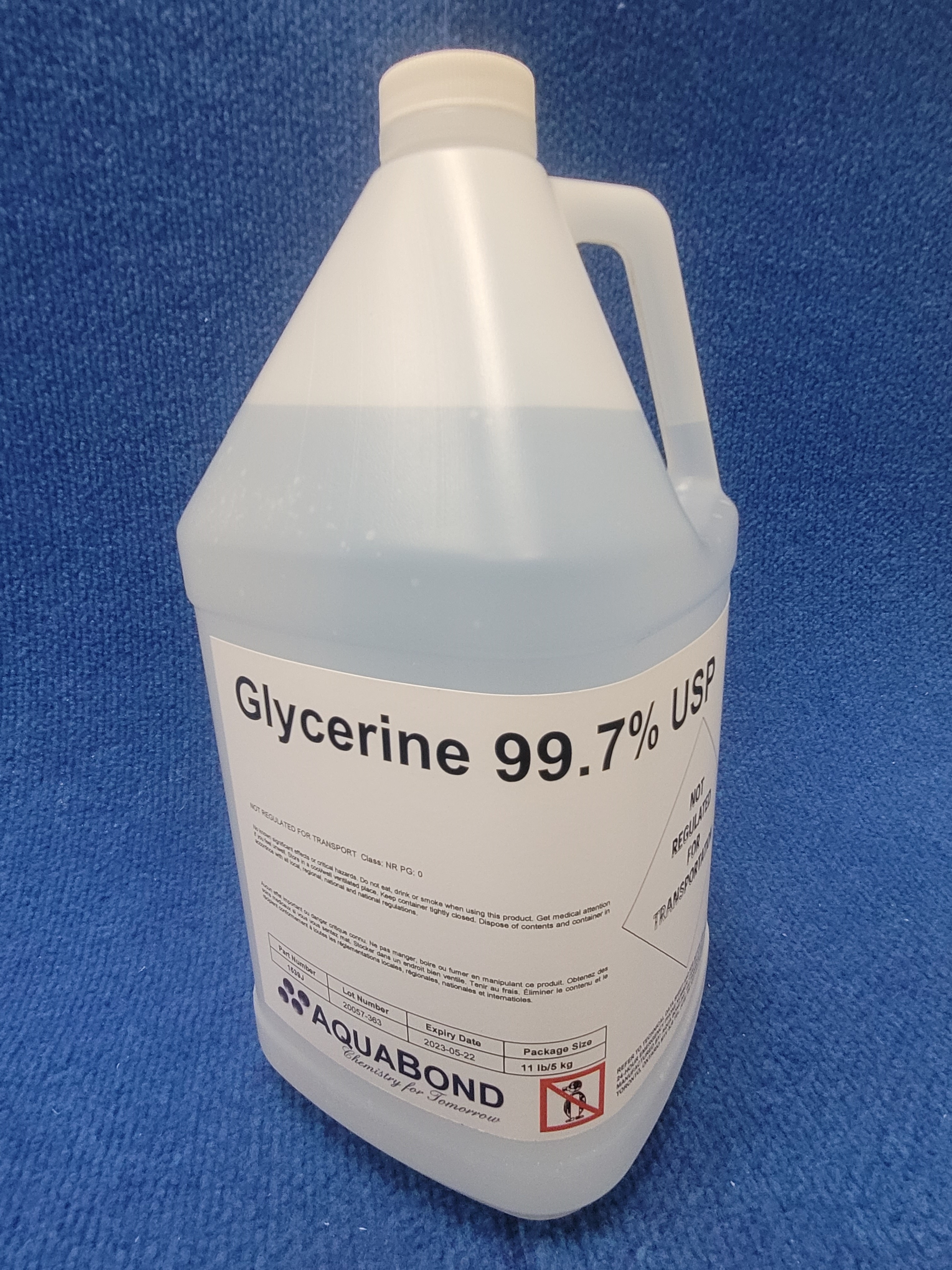
Aqua Bond sells USP Food Grade Glycerine, packaged in 5 kg for skin care and bath balm esthetics. See our document section for TDS and SDS.
Glycerine 99.7% USP is 100% natural, free of GMO, and is manufactured in North America. See our TDS. It is clear viscous, water soluble, hygroscopic polyol derived from vegetable-based palm oil or palm kernel oil via hydrolysis. Glycerine unique low vapour pressure combined with its hygroscopic ability to absorb moisture creates an excellent humectant-plasticizer in products yielding desirable softness, flexibility, creaminess, and shelf life. Low volatillity or low vapour pressure allows for permanency of glycerine products. The low vapour pressue is closely allied to hygroscopicity in glycerine's performance as a humetant. In addition, it is nontoxic and considered hypoallergenic. It is generally regarded as safe (GRAS). Glycerine is virtually nontoxic in the digestive system and non-irritating to the skin and sensitive membranes, except in very high concentrations when a dehydrating effect appears. These conditions make it ideal for cosmetics, creams, lotions, shampoos, capsules, mouthwash, bath balms, and dentrifices (toothpaste). In the literature the multifunctional nature of Glycerine is noted to have over 1500 applications. We mentioned above cosmetic applications, however in cleaning productsglycerine is used in soaps and synthetic detergents and degreasing in hand cleaners while it cleans, conditions and moisturize your hands. It is used as a wetting agent in emulsifiers, wax emulsions, and skin protectives. Glycerine is used in the pharmaceutical as an excipient, but is also used in cough medicine, anesthetics, ear treatment, bacterial preservation, in topical creams for conditions of eczema and psoriasis, and nitroglycerin in heart conditions. It is well known in food and breverage as a sweetener, moistening properties in baked goods, and enhancing the viscosity of liquids in drinks. It is used as flavouring and dyes in baked goods. It is used in icing for cakes and cookies since it prevents crystallization of sugar in the icing. It is used in ice cream as a subsitute for sugar and for overall texture as well as preventing sugar crystallization.